How I Fuel Morning Runs When I Don’t Feel Hungry
This post contains affiliate links. If you make a purchase through them, I may earn a small commission at no cost to you.
For me, mornings are not consistent. Some days I wake up absolutely ravenous and could eat my entire kitchen. Other days, the idea of food feels… unappealing. If you menstruate, you already know appetite can swing depending on the phase of your cycle. I used to think this was no big deal and that I could just run on whatever my body was “naturally” telling me. It took a long time for me to realize fasted running is a very reliable way to get lightheaded, feel nauseous, and just generally feel awful.
Why you might not feel hungry first thing
Cortisol rises naturally in the morning, which helps wake you up. Higher cortisol suppresses hunger for a lot of people and can make food seem unappealing even when your body could genuinely use carbs. Add in an overnight fast and you wake up with depleted liver glycogen. That combination explains why appetite cues can be misleading. Feeling “not hungry” in the morning is not your body’s way of telling you that it’s fully fuelled and doesn’t need anything.
Why I stopped fasted running
Like a lot of runners, I assumed fasted training would make me feel light and efficient. In reality it made me feel nauseous, lightheaded, and crashed hard the rest of the day. Workouts felt harder than they should have and recovery took noticeably longer. Once I started fueling even small amounts before morning runs, my energy stabilized, my mood was better, and my runs felt smoother. You do not need a giant breakfast to make a big difference.
The goal of pre-run fuel
In simple terms: before any type of run, we want quick carbs that hit the bloodstream fast and digest easily. We are not aiming for a full breakfast (unless you’re not planning to run until hours later in the morning). We are just topping up so you do not start the run behind.
What we are aiming for:
15g to 45g of carbs
minimal fat and fiber
easy to chew or sip
tolerable with low appetite
If you are running longer than ~75 minutes, you will likely need to bring fuel for during the run as well.
Easy pre-run ideas for people who do not feel like eating
Here are the things that consistently work for me and that do not trigger the "I do not want food right now" feeling.
When appetite is low, I sort pre-run fuel options into three groups. Solid foods, liquids, and the in-betweens. The goal is to get quick carbs in without upsetting your stomach or creating a full-meal situation before you even pull on shoes.
1. Solid foods
These work when you can handle chewing and want something a bit more substantial. They are simple carbs and low fiber so they digest quickly.
Banana (medium): ~27 g carbs
Rice cakes (2) with jam: ~20 to 28 g carbs
Bagel with jam (half): ~30 to 35 g carbs
Full bagel: ~55 to 65 g carbs
Toast with jam (1 slice): ~22 to 30 g carbs
Small bowl of breakfast cereal with milk (pick something lower in fibre and use whatever milk type you tolerate): ~25 to 35 g carbs
Solid options tend to fall between 20 to 35 g which pairs well with a 30 to 60 minute morning run.
The texture is dry or crunchy rather than mushy, which makes them more tolerable for a lot of people. This category is my best friend during my luteal phase when my hunger is already up.
2. Liquids
Liquids are great when chewing feels like too much work or when appetite is suppressed. Also useful when you only have ten minutes before a run.
Fruit juice (200 ml): ~22 to 26 g carbs
Fruit juice mixed with electrolytes: ~22 to 32 g carbs
Full sugar sports drink (250 ml): ~15 to 20 g carbs
Skratch labs hydration mix is my go-to
Smoothie with fruit + milk/oat milk (250 to 300 ml): ~30 to 45 g carbs
Oat milk latte (12 to 16 oz): ~20 to 30 g carbs
Liquids work well when appetite is low or when you have less than 10 minutes before heading out. They are fast to digest and get glucose into your bloodstream with minimal effort.
3. The in-betweens
These are carbs that are not quite solid but also not a full drink. Great for people who find solid textures unappealing in the morning.
Applesauce pouch: ~12 to 18 g carbs
Maple syrup (1 tablespoon or packet): ~12 to 14 g carbs
Honey (1 tablespoon or packet): ~15 to 17 g carbs
Standard gel: ~20 to 25 g carbs
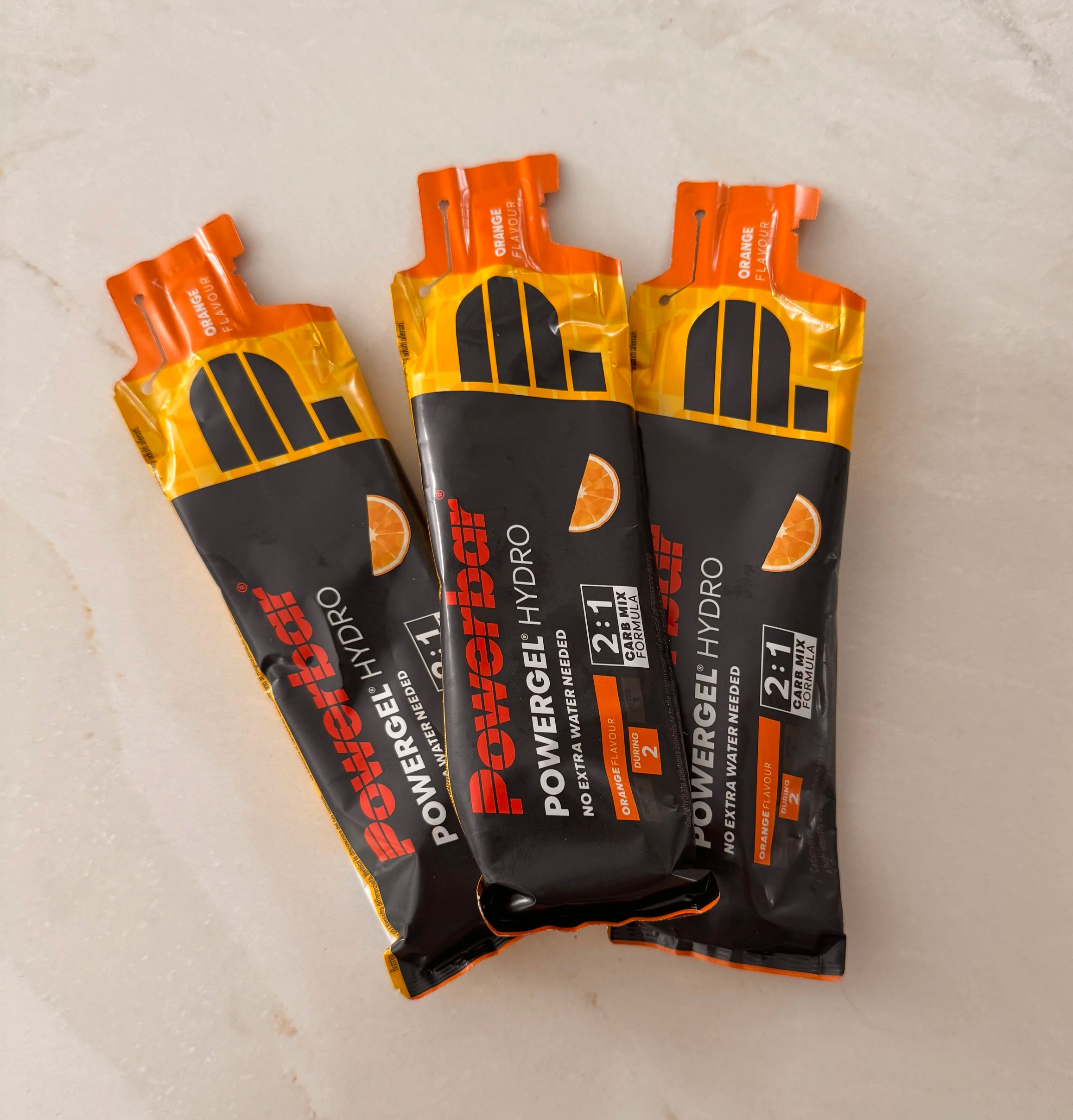
My favorite gels: PowerBar Hydro Gels
If you hate the sticky consistency of most gels like me, these are hands-down the most tolerable option I have found. The texture is basically liquid. The orange flavor tastes like orange juice or Sunny D which is way easier to get down in the morning. Because it is already fluid, you do not feel like you have to chew it and it does not coat your mouth. Plus, it’s 25g of carbs and has electrolytes, too!
And no, this is not sponsored. Just the best option I’ve found doing my own trial and error!
What about coffee?
Coffee is fine for most people but it can mask low energy because caffeine can make you feel alert even when your glycogen is low. Coffee also increases gastric motility, which is why runners have such a strong relationship with bathrooms.
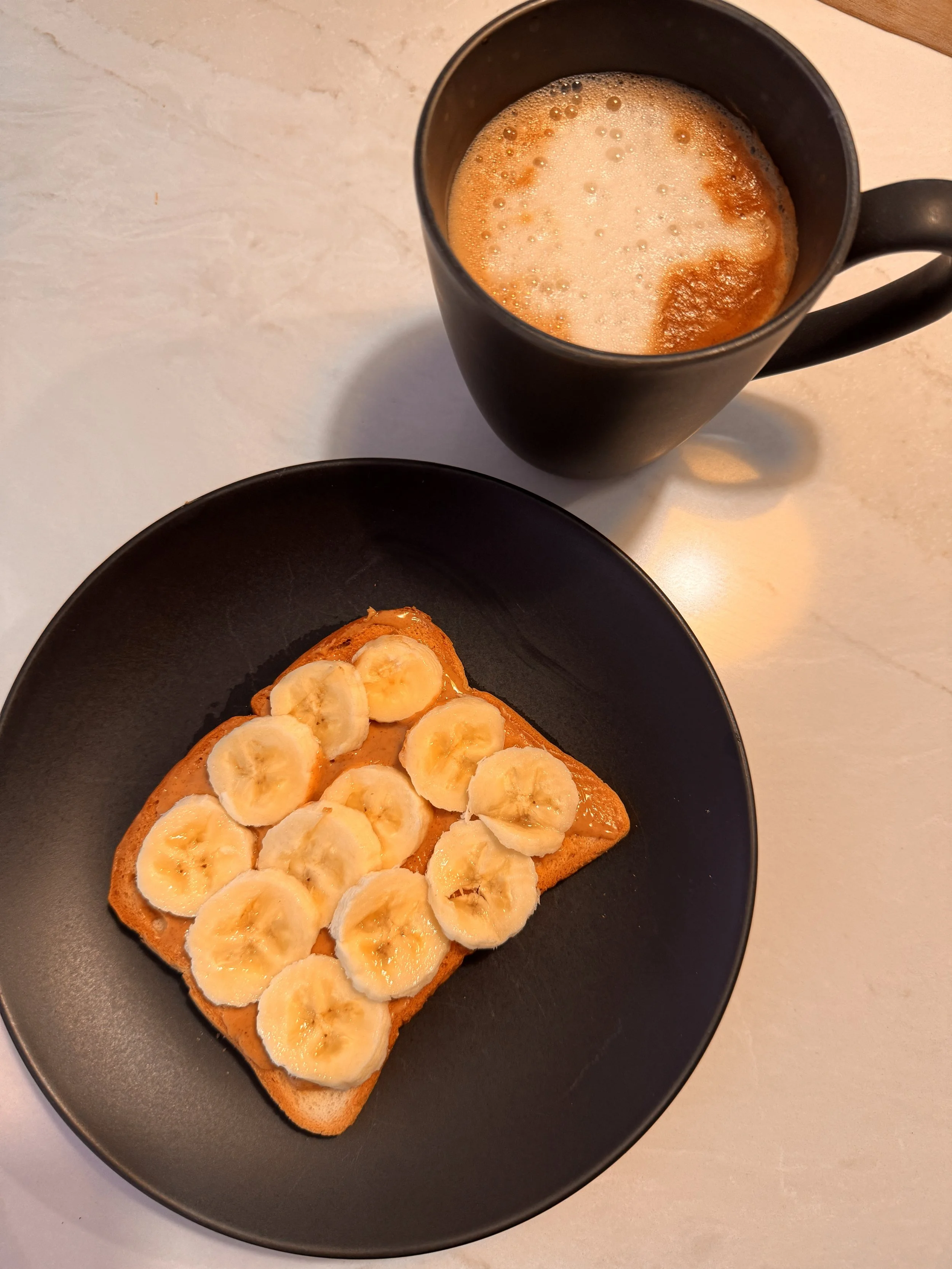
One tweak that actually helps on low-appetite mornings is an oat milk latte. Oat milk has carbs and a little fat so it gives you quick energy without feeling like solid food. If you struggle to get anything down, sipping calories can be easier than chewing them.
Timing matters more than perfection
Ideally you eat 30 to 60 minutes before running, but if all you have is 10 minutes, liquid carbs and gels are your friend. A lot of women think it is normal to feel terrible for the first 20 minutes of a run, but half the time it is just low blood sugar.
When you absolutely cannot tolerate food in the morning
If you truly cannot get any calories down, start with liquids or small single-ingredient carbs and slowly build up tolerance. Gut training is real. Just like you train your legs, you can train your gut to handle carbs before runs. Start with 10 to 15 grams of carbs and build up to 30 to 45 grams over a few weeks.
A sample pre-run routine
This is what my basic weekday routine looks like on mornings when I do not have a long run:
Wake up
Sip water or electrolytes
Eat rice cakes with jam or applesauce pouch
Coffee
Allow 30 min for digestion to kick in (and use the bathroom)
Run
Post-run real breakfast with protein
If I am doing a long run or a workout, I eat more and earlier.
Why I no longer fast-run on purpose
Fasted training has become almost a badge of honor in some fitness corners, but it pushes up cortisol, increases protein breakdown, makes recovery harder, and feels terrible for most women. Unless you have a very specific metabolic reason for it, fueling your runs makes the entire process of building endurance easier and safer.
